How To Grow an Affiliate Program: 8 Expert-Backed Strategies
Launching a SaaS affiliate program is an exciting milestone, but what happens when growth stalls? Many B2B SaaS companies find themselves grappling with the challenge of how to grow an … How To Grow an Affiliate Program: 8 Expert-Backed Strategies
Launching a SaaS affiliate program is an exciting milestone, but what happens when growth stalls?
Many B2B SaaS companies find themselves grappling with the challenge of how to grow an affiliate program that drives consistent results.
Initial enthusiasm fades, sign-ups slow, and revenue stagnates. Sound familiar? You’re not alone.
The real challenge lies not in launching the program but in sustaining and scaling it effectively.
This guide is here to help you move beyond generic advice. Built on expert interview insights and proven strategies, it’s tailored specifically for SaaS companies like yours.
From reactivating dormant affiliates to fostering strong partnerships and scaling with automation, these tips are practical, actionable, and meant to help your program grow.
Let’s get started.
Growing a SaaS affiliate marketing program: Significance and key challenges
Scaling an affiliate program is a powerful lever for driving consistent MRR growth in the SaaS industry. Yet, growth doesn’t happen on autopilot – it demands strategic planning and a clear understanding of what it takes to succeed. By grasping the significance of a well-scaled program and preparing for the challenges ahead, you’ll be better positioned to create a sustainable and impactful affiliate ecosystem.
Key benefits
- Drives consistent and scalable MRR growth: Affiliates act as an extension of your sales and marketing team, driving qualified leads and converting them into paying customers. As your program grows, the cumulative effect of multiple active affiliates ensures a consistent and scalable increase in MRR, helping you hit revenue milestones faster.
- Expands market reach and boosts brand authority: Affiliate marketers can introduce your SaaS product to audiences you may not have been able to target directly. You expand your reach into untapped markets by partnering with industry experts, bloggers, or influencers. A scaled affiliate program enhances your brand’s credibility as affiliates act as advocates, lending authority to your product and providing valuable backlinks from their affiliate websites.
- Lowers CAC while maximizing ROI: Traditional digital marketing channels often come with high upfront costs and unpredictable returns. Incorporating strategies like search engine optimization (SEO) alongside a scaled affiliate program can provide a dual advantage, as both approaches focus on performance-driven results.
Key challenges
- Keeping affiliates engaged and motivated: Affiliates are independent partners, often juggling multiple programs. Their interest can wane without clear incentives, regular communication, and access to performance data. Scaling your program requires fostering strong relationships through personalized support, timely payouts, and recognition of their efforts.
- Managing a diverse and growing affiliate ecosystem: As your program scales, you’ll encounter a wide range of affiliates with varying levels of expertise, promotional styles, and target audiences. As your network expands, ensuring brand consistency and navigating program compliance becomes increasingly complex.
- Ensuring operational efficiency at scale: Managing payouts, distributing affiliate links, tracking performance, and providing consistent support can become overwhelming as your affiliate base grows. Leveraging strategies on how to automate affiliate marketing can significantly streamline these processes. Automation simplifies workflows and ensures your program scales efficiently, freeing up resources for strategic roles such as an affiliate manager who can focus on relationship building and program optimization.
Ultimately, you can craft a robust SaaS affiliate marketing business growth strategy by understanding these compelling benefits and preparing for the potential challenges.
8 expert tips to grow your SaaS affiliate program in 2025
Below, we’ll dive into the expert interview-based affiliate marketing tips, breaking them down with examples and giving you actionable guidance on how to grow an affiliate marketing program.
Tip 1: Forge genuine connections with your affiliate partners
Strong partner relationships are the cornerstone of making affiliate marketing work. When affiliates feel valued and supported, they are more likely to go the extra mile, increasing their promotional efforts and deepening their commitment to your program.
Personalize your communication
- Regular check-ins: Host monthly video calls to address their challenges and discuss goals.
- Custom insights: Share performance metrics and actionable advice specific to their campaigns. For example, identify which channels yield the best ROI and suggest tweaks to enhance their results.
Dustin Howes, co-founder of Affistash, highlights the importance of building connections:
“Be personal, make friends. You want these partners to help you now and later in your career. Put yourself in their shoes when trying to motivate them.”
Foster collaboration
- Content partnerships: Provide affiliates with tailored resources like ebooks or guides. These marketing materials should showcase your product and add value to their promotions.
- Co-marketing efforts: Invite affiliates to participate in webinars, product launches, or joint campaigns. These activities strengthen their association with your brand while giving them a platform to engage their audience more effectively.
Muhammad Usama, Head of partnerships at AuthoredUp, underscores the value of consistent collaboration:
“Regularly discuss upcoming opportunities like co-marketing initiatives, product launches, or sales promotions to maintain excitement around the partnership.”
Tip 2: Focus on the top 20% of affiliates for maximum impact
In affiliate marketing, not all contributors are created equal. The 80/20 rule, or Pareto Principle, is a robust framework for prioritizing efforts where they matter most. You can generate significant results while optimizing your resource allocation by identifying and nurturing your top-performing affiliates.
Identify top performers
- Revenue analysis: Use top affiliate marketing tools to analyze performance metrics and pinpoint the top 20% who generate 80% of your results. Monitor metrics like conversion rates, average order value, and lead quality.
- Exclusive perks: Reward these high-performing affiliates with better commissions, access to beta features, or priority support. Personalized gestures, like VIP event invitations or customized promotional materials, also help reinforce their value to your program.
Ishay Tentser, CEO of TimelinesAI, explains:
“Identify the 20% of affiliates that generate 80% of your revenue, and prioritize nurturing those relationships.”
Support smaller contributors strategically
- Seasonal campaigns: Motivate smaller affiliates with limited-time bonuses or themed promotions during high-traffic seasons, such as Black Friday or year-end sales. Tailored incentives, like increased commissions for a short period, can drive a temporary spike in engagement.
- Simplified resources: Provide ready-to-use marketing kits, such as pre-written emails or banners, to make it easier for these affiliates to participate without requiring significant effort on their part.
Yahly Bar Lev, a growth and partnerships consultant, suggests:
“Offer better commissions to your top 20% while maintaining regular communication with others, especially ahead of major sales events.”
Tip 3: Embrace a “give first” mentality
A “give first” mentality is the cornerstone of building authentic, trust-based relationships with affiliates. When you prioritize delivering value before asking for results, affiliates see your program as more than a transactional opportunity – they see it as a partnership worth investing in. This approach cultivates loyalty, increases motivation, and paves the way for long-term success.
Provide upfront value
- Training and education: Host webinars or create tutorials to help affiliates effectively understand and promote your product. Consider creating on-demand tutorials or video series tailored to their needs, such as targeting a niche audience or optimizing for a particular platform.
- Networking opportunities: Facilitate connections among your affiliates by hosting virtual meetups or networking events. Encourage collaboration between affiliates with complementary audiences to help them amplify their reach.
Shahzaib Javed, consultant at vTechnica, advises:
“Stop treating affiliates like a sales organization. Focus on giving and sharing first to build trust.”
Co-create success
- Collaborative campaigns: Engage affiliates in brainstorming sessions to design campaigns that resonate with their audience. For instance, co-develop a case study or success story featuring an actual customer that aligns with the affiliate’s niche.
- Feedback loops: Create an open channel for affiliates to share their ideas and experiences. Use their feedback to fine-tune your program, improve promotional materials, or adjust your commission structure. Regular surveys or one-on-one check-ins can help surface valuable insights.
Tip 4: Leverage reciprocal partnerships
Reciprocal partnerships, where two SaaS companies collaborate to promote each other’s offerings, can amplify your affiliate program’s reach by tapping into shared audiences. This strategy enhances visibility and builds credibility through association with trusted brands. By leveraging complementary strengths, both partners can unlock new growth opportunities and achieve mutual success.
Identify suitable partners
- Seek complementary solutions: Look for companies offering products that complement your own without directly competing. For instance, a CRM platform might collaborate with an email marketing tool, creating a seamless experience for shared customers.
- Leverage affiliate dashboards: Use affiliate management platforms to identify potential partners already engaging with similar demographics. Evaluate their performance metrics, user engagement, and reputation to ensure compatibility.
Evan Weber from Experience Advertising shares:
“For SaaS, reciprocal affiliate marketing partnerships with other SaaS companies can be a game-changer.”
Execute co-branded campaigns
- Joint promotions: Bundle your products into a single offer that provides added value, such as discounted pricing or exclusive features. This creates a win-win scenario where both companies can attract new customers while delivering extra value.
- Collaborative content creation: Work together on blog posts, case studies, or whitepapers emphasizing the synergy between your offerings. For example, you might create a guide showing how customers can use your products to achieve specific business goals.
Maintain ongoing collaboration
- Frequent check-ins: Schedule regular meetings with your partner to discuss campaign performance and identify new opportunities for co-promotion.
- Expanding the partnership: Once initial campaigns succeed, consider deeper integration, such as creating API connections between your products or launching a joint affiliate program.
Tip 5: Provide bespoke resources to empower affiliates
Providing affiliates with tailored resources and training is essential for driving successful promotions. Bespoke resources equip affiliates to represent your brand accurately and save them time and effort, allowing them to focus on creating high-quality campaigns.
Offer comprehensive onboarding
- Step-by-step guides: Develop detailed guides covering your product’s features, unique value propositions, and the ideal customer profile (ICP). Include examples and use cases that resonate with affiliates’ target audiences.
- Resource center: Build an easily accessible hub with marketing materials, ad banners, email templates, and product videos. Keep the content updated to reflect the latest product features and promotions.
Antonio Gabric, Outreach Manager at Hunter.io advises:
“Build a resource center specifically for your affiliates. The goal is to give them all the information about your program and product.”
You can further explore our detailed guide on affiliate onboarding expert tips for more insights on crafting an effective onboarding strategy.
Provide ongoing education
- Live webinars and updates: Host webinars to announce product launches, share best practices, and discuss new marketing strategies. Make these sessions interactive, allowing affiliates to ask questions and provide feedback.
- On-demand tutorials: Create video tutorials and written guides to address common queries, such as optimizing campaigns for specific platforms or targeting niche customer segments.
- FAQs and troubleshooting: Develop a comprehensive FAQ section that addresses potential challenges affiliates may encounter, from technical issues to performance tracking.
Tip 6: Bring inactive affiliates back into the fold
Inactive affiliates often represent a hidden opportunity within your program. These affiliates have already shown interest in your brand and program, so reigniting their enthusiasm requires significantly less effort than recruiting new ones. You can tap into their potential for incremental growth while revitalizing your program’s momentum by nudging them to start affiliate marketing for your product again.
Use targeted outreach
- Personalized emails: Segment your inactive affiliates and craft tailored emails based on their previous performance, audience, or niche. Highlight new program updates, product enhancements, or market opportunities that align with their interests.
- Exclusive incentives: Create urgency by offering time-sensitive bonuses, such as higher commissions for a specific campaign period or exclusive early access to upcoming product launches.
Shahzaib recommends:
“Create urgency with limited-time promotions to bring dormant affiliates back into action.”
Provide fresh resources
- Revamp promotional materials: Offer newly designed banners, videos, and email templates tailored to current trends or their specific audience segments. Show them how these materials can refresh their campaigns and improve performance.
- Performance feedback: Share insights on their past performance, highlighting what worked well and offering suggestions for improvement. This data-driven approach can inspire confidence and help them optimize their future campaigns.
For a more comprehensive guide on maintaining affiliate relationships and overcoming challenges with inactive affiliates, explore our blog on how to manage affiliates.
Tip 7: Use workshops and webinars to foster affiliate growth
Partner enablement events create opportunities for education, networking, and motivation.
Organize interactive sessions
- Industry insights webinars: Host sessions on current industry trends, market challenges, and emerging opportunities. For example, if your product aligns with a growing technology trend, dedicate a webinar to exploring how affiliates can capitalize on that trend while promoting your solution.
- Live Q&A sessions: Create opportunities for affiliates to ask questions about their challenges or ideas directly. These real-time exchanges provide clarity, build trust, and showcase your commitment to their success.
Ovi Negrean, Co-founder & CEO of SocialBee, believes these affiliate marketing efforts are critical.
“Offering ongoing training, like webinars or tutorials, shows your commitment to their growth.”
Promote collaboration
- Networking breakout rooms: During virtual or in-person events, create smaller breakout groups where affiliates with similar interests or challenges can connect. These sessions can spark innovative ideas and partnerships that benefit both the affiliates and your program.
Tip 8: Set measurable objectives for performance clarity
Setting measurable objectives is essential to creating a roadmap for success in your affiliate program. Clear goals and key performance indicators (KPIs) provide a shared framework for accountability, helping affiliates align their efforts with your business objectives. When affiliates understand what is expected and how success is measured, they are more likely to stay focused, motivated, and productive.
Define expectations
- Create tiered goals: Establish a mix of short-term, mid-term, and long-term targets that accommodate affiliates at different stages of engagement. For example, new affiliates could focus on driving traffic, while experienced affiliates might aim for higher conversion rates or revenue generation.
- Communicate deadlines and milestones to keep affiliates focused.
Ovi suggests:
“Set clear expectations and outline commission structures so affiliates understand what’s expected.”
Monitor and share performance data
- Leverage analytics tools: Use affiliate management platforms like Reditus to track real-time data on metrics like traffic, conversion rates, and revenue. Identify trends and anomalies to understand affiliate behaviors and optimize strategies.
- Constructive feedback: Offer specific, actionable suggestions for improvement based on performance metrics. For instance, if an affiliate struggles with low click-through rates, recommend optimizing their promotional content or targeting strategy.
Simplify and scale your affiliate program with Reditus
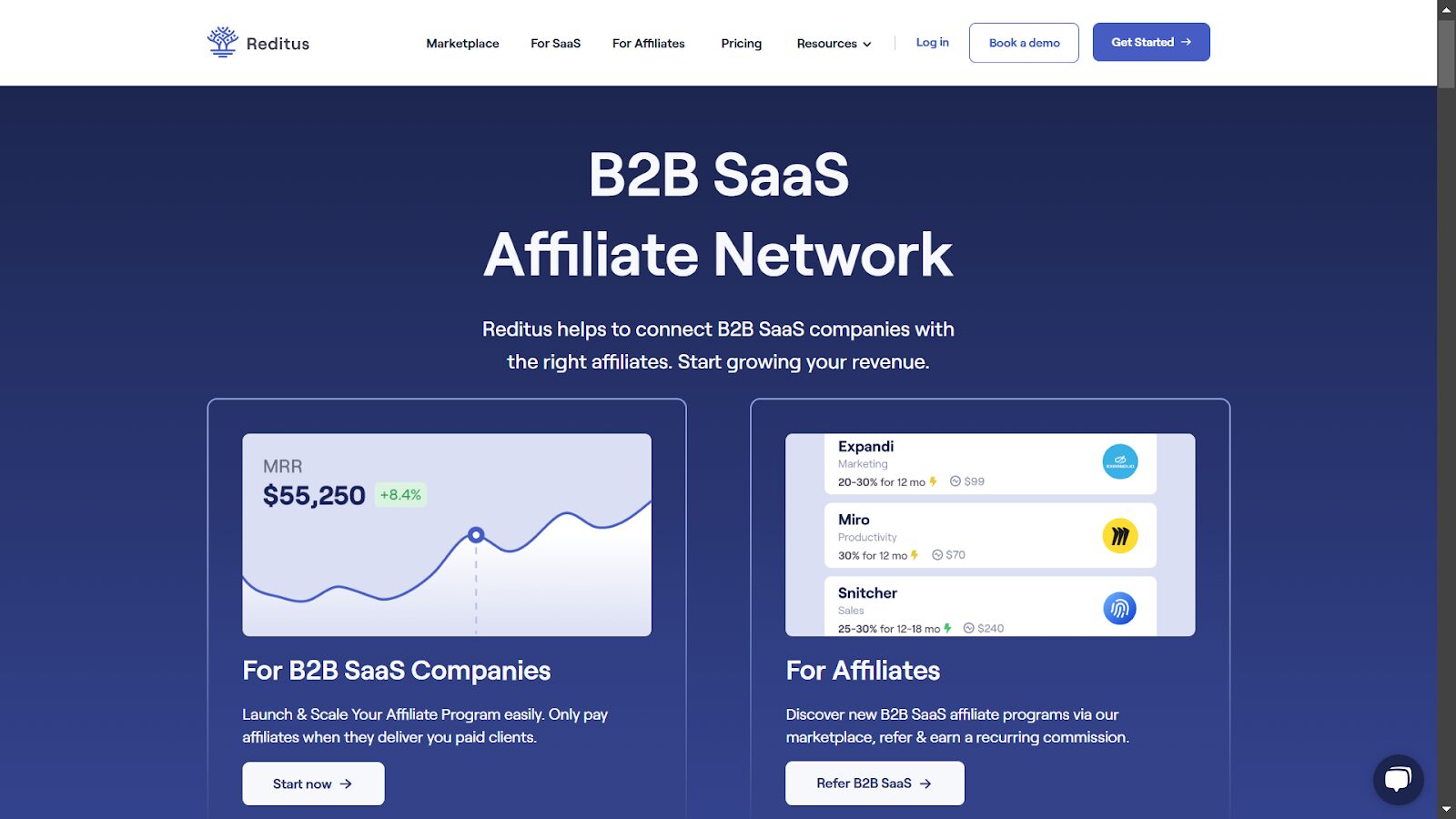
Screenshot from Reditus website.
Reditus is designed specifically for B2B SaaS companies looking to launch and scale their affiliate programs in a cost-effective and streamlined way. Here are some ways on how to grow your affiliate program with Reditus.
Recruit top-tier affiliates through the Reditus Marketplace
Expanding your affiliate network starts with connecting to the right affiliates. The Reditus Marketplace provides direct access to a dedicated pool of over 11,000+ B2B SaaS affiliates, offering a powerful way to scale your program with minimal effort. You also have the option to directly browse these affiliate profiles with contextual data on demographics, affiliate sales performance for other companies in the network, affiliate site traffic numbers and more.
- Exclusive SaaS focus: The Reditus Marketplace is tailored for B2B SaaS companies, ensuring your program reaches a highly relevant audience.
- Generate affiliate sign-ups: Listing your program in the marketplace boosts visibility, attracting new affiliates and driving sign-ups quickly.
- Cost-effective growth: Starting at $139 per month, this scalable solution helps you recruit affiliates without high upfront costs.
For more insights on attracting affiliates, explore our blog on affiliate recruitment tips.
Integrate seamlessly for scalable workflows
Automation is at the heart of scaling efficiently. Reditus integrates with your existing tools, enabling smooth workflows and minimizing manual effort.
- Send data to your CRM: Automate affiliate onboarding and follow-up email campaigns.
- Trigger notifications: Get alerts for key events, like new affiliate signups or payout thresholds being met.
- Flexible integrations: New integrations can be added on request to meet your unique needs.
Automate payouts to save time
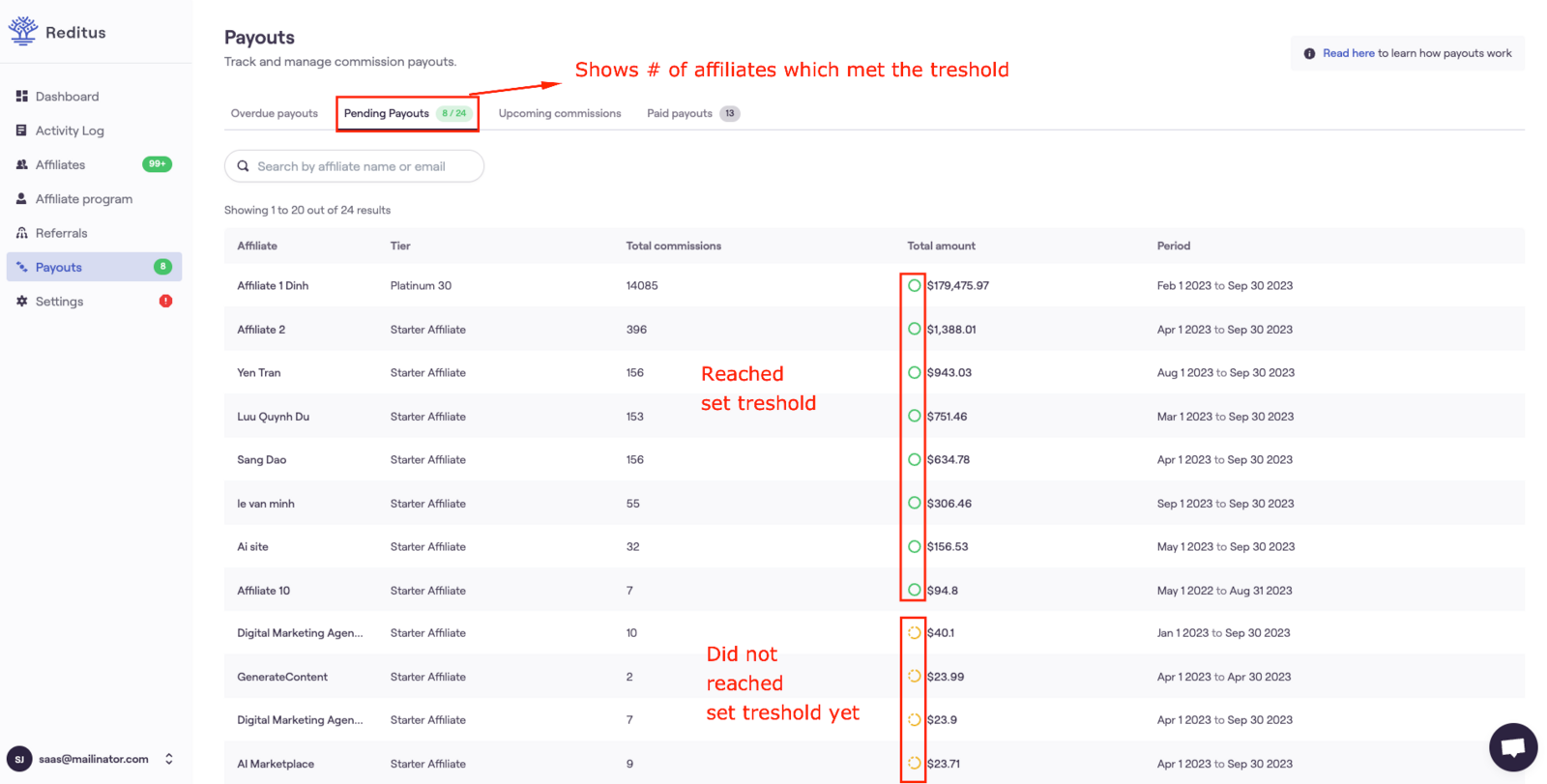
An intuitive affiliate payout interface.
Managing payouts at scale can be tedious. Reditus handles this for you, tracking who needs to be paid, why, and when.
- Set up payout thresholds: Avoid low-value payouts by specifying minimum amounts.
- Maintain control: Manage payouts manually or opt for automated processing.
- Transparent tracking: Track payout histories and ensure all affiliates are compensated accurately and on time.
Motivate affiliates to prioritize your program
Engaged affiliates drive better results. Reditus provides tools to help you keep your affiliates motivated and aligned with your program’s goals.
- Set up public and private tiers: Create reward structures tailored to affiliate performance, offering higher commissions or exclusive perks for top performers.
- Flexible reward systems: Offer different incentives based on affiliate type, engagement, or audience size to keep them focused on driving results.
- Recognize top performers: Highlight affiliates who exceed expectations, fostering competition and loyalty within your network.
By simplifying affiliate recruitment, management, and scaling workflows, Reditus ensures that your affiliate program operates efficiently at every stage. Its robust tools and SaaS-specific features make it the ultimate solution for B2B SaaS companies looking to grow their affiliate programs sustainably.
Common pitfalls to avoid when scaling your affiliate program
Certain missteps can hinder growth and impact performance even with a strong affiliate program. Avoiding these pitfalls ensures your efforts are strategic, sustainable, and focused on achieving long-term success.
Prioritizing quantity over quality
It’s tempting to focus solely on growing your affiliate base, but quantity doesn’t always equate to effectiveness.
- Neglecting smaller affiliates with potential: Smaller affiliates often have highly engaged audiences that convert at higher rates. Focusing only on large affiliates may mean missing opportunities for impactful partnerships.
- Unvetted sign-ups: Allowing unqualified affiliates into your program can dilute your brand and lead to low-quality traffic or minimal ROI. Instead, prioritize affiliates with relevant expertise and proven performance.
Failing to maintain consistent communication
A lack of communication can lead to disengagement and missed opportunities for collaboration.
- Irregular updates: Affiliates need timely updates about your product, promotions, and program changes. Regular communication ensures they stay aligned with your goals.
- Ignoring affiliate feedback: Affiliates often have valuable insights about your target audience and product. Neglecting their input can mean missing critical opportunities for growth or improvement.
Providing insufficient resources and support
Affiliates cannot succeed without the tools, knowledge, and guidance necessary to promote your product effectively.
- Outdated or incomplete materials: Affiliates need up-to-date marketing materials tailored to their audience and channels. Without these, their campaigns may fall short.
- No ongoing training: A lack of education about product updates, market trends, or promotional strategies can lead to stagnant performance. Provide training sessions and workshops to keep affiliates informed and motivated.
Wrapping up: Turn expert insights into action with technology from Reditus
Implementing expert-backed strategies is the first step to transforming your SaaS affiliate program into a scalable growth engine.
By fostering authentic relationships, prioritizing high-performing affiliates, empowering partners with tailored resources, and avoiding common pitfalls, you can lay the groundwork for long-term success.
Avoid common pitfalls like prioritizing quantity over quality, neglecting communication, or under-resourcing affiliates, and instead focus on creating a supportive, well-structured ecosystem.
However, turning these insights into action requires the right software tools to streamline operations and scale efficiently. This is where Reditus becomes an indispensable part of your journey.
With Reditus, you don’t just manage your affiliate program – you elevate it.
From recruiting top-performing affiliates through the Reditus Marketplace to automating tedious processes like tracking conversions and payouts, our platform is purpose-built for B2B SaaS companies like yours. Sign up for a 14-day free trial today, no credit card required, and experience firsthand how our platform simplifies affiliate management and drives sustainable growth.

Meet the author
Back in 2020 I was an affiliate for 80+ SaaS tools and I was generating an average of 30k in organic visits each month with my site. Due to the issues I experienced with the current affiliate management software tools, it never resulted in the passive income I was hoping for. Many clunky affiliate management tools lost me probably more than $20,000+ in affiliate revenue. So I decided to build my own software with a high focus on the affiliates, as in the end, they generate more money for SaaS companies.

Affiliate Agreement Monitoring: 7 Key Things to Know
Affiliate marketing is powerful, but only if it’s well-managed. Even the best-written affiliate agreement is just a static PDF if no one’s enforcing it. In the world of B2B SaaS, … Affiliate Agreement Monitoring: 7 Key Things to Know

How to Manage Affiliate Marketing: A Complete Guide for SaaS Companies
Affiliate marketing has come a long way from shady banner ads and mass coupon sites. For SaaS companies today, it’s a strategic channel that can drive real revenue, expand reach, … How to Manage Affiliate Marketing: A Complete Guide for SaaS Companies

18 Best AI Tools For Affiliate Marketing in 2026
AI isn’t coming for affiliate marketing because it’s already here. From crafting high-converting copy to refining SEO, automating outreach, and measuring performance, AI tools are transforming the way affiliate marketers … 18 Best AI Tools For Affiliate Marketing in 2025